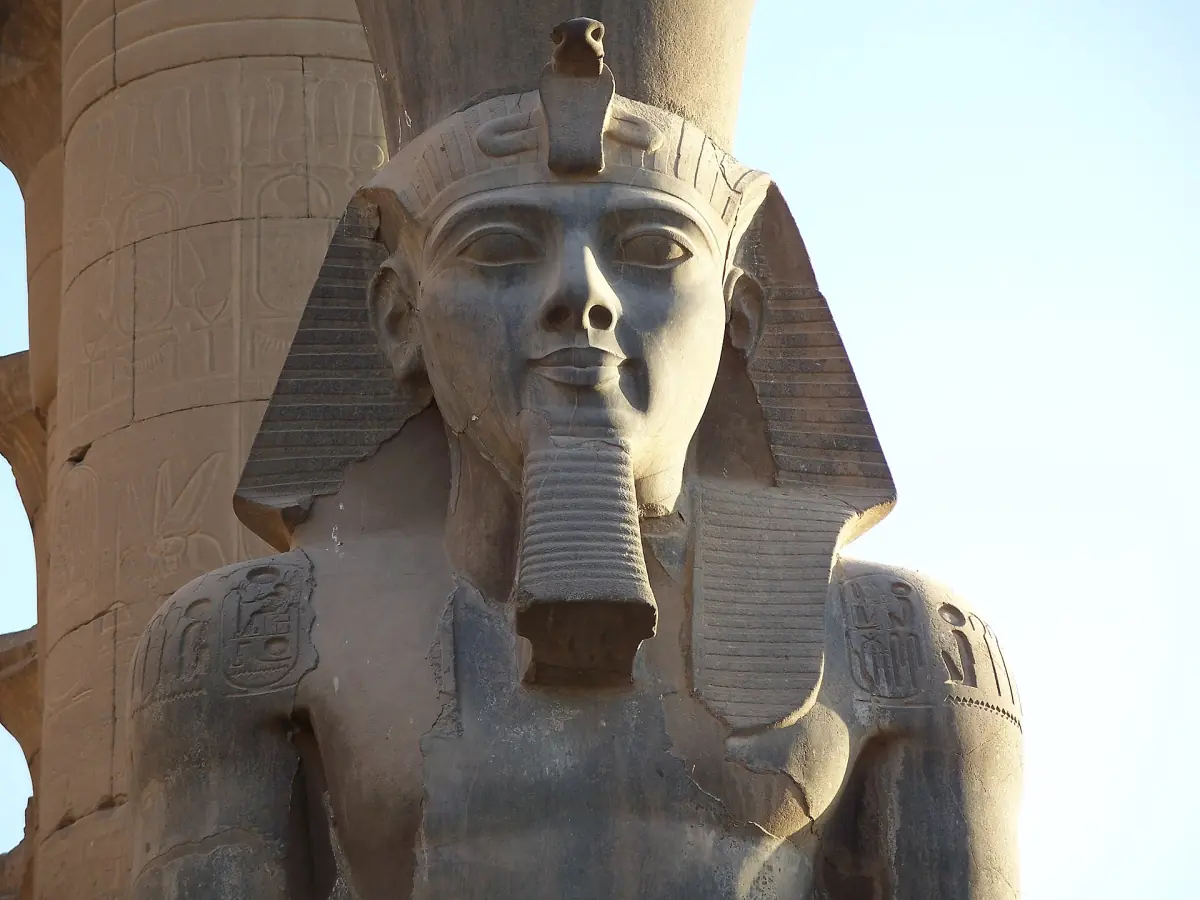
Ramses II at Luxor Temple at a glance
Ramses II was a king of the 19th dynasty who ruled from about 1279 to 1213 BC. At Luxor Temple he is the king you meet first. He added a court with columns on its sides, the monumental pylon that forms the entrance and the colossal statues in front of it. Two obelisks once stood before the gateway. One is still in place, and its twin stands in Paris.
The rest of the temple is older. Amenhotep III built the core, the sun court and the great colonnade, which is why the building feels like two different eras joined at the pylon. You can compare them in our guide to Amenhotep III and the colonnade. If you plan to go in, see Luxor Temple tickets for prices and hours.
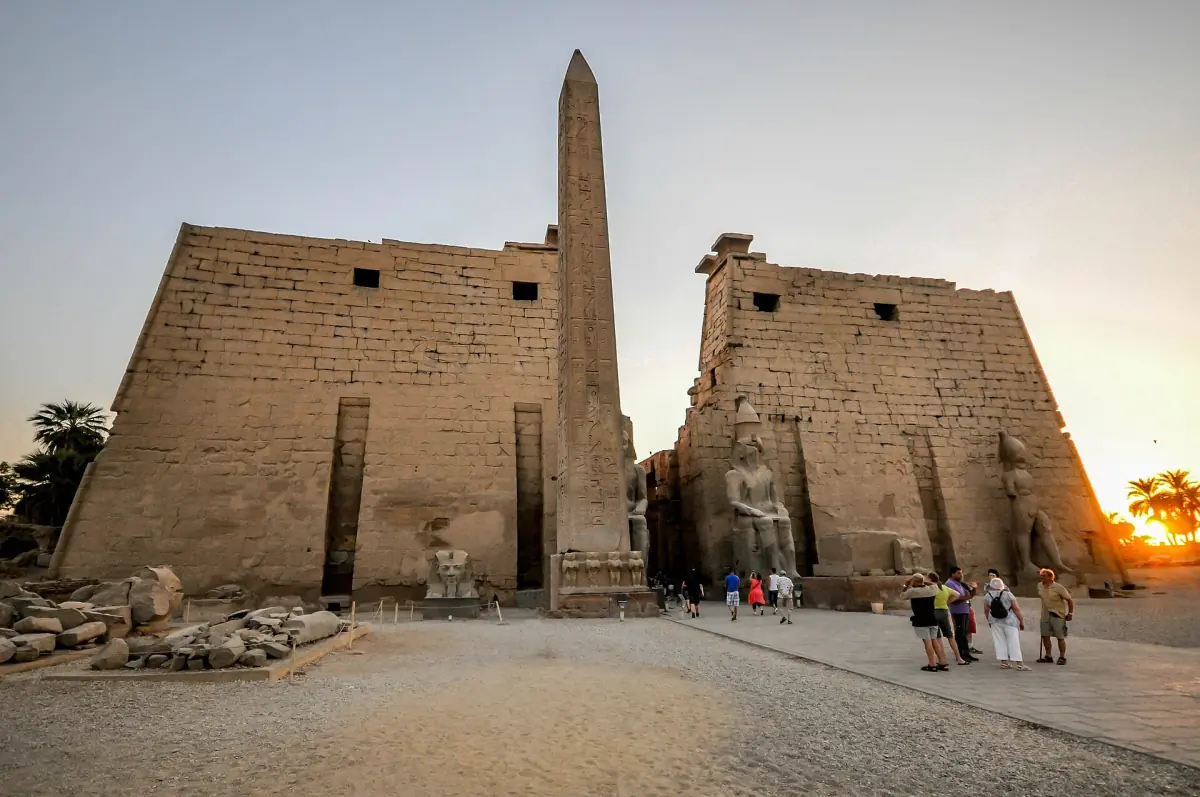
What Ramses II built at Luxor Temple
Four things to look for as you walk in.
The pylon
The great gateway is the first thing you see from the street. It is Ramses II's work and sets the scale for everything behind it.
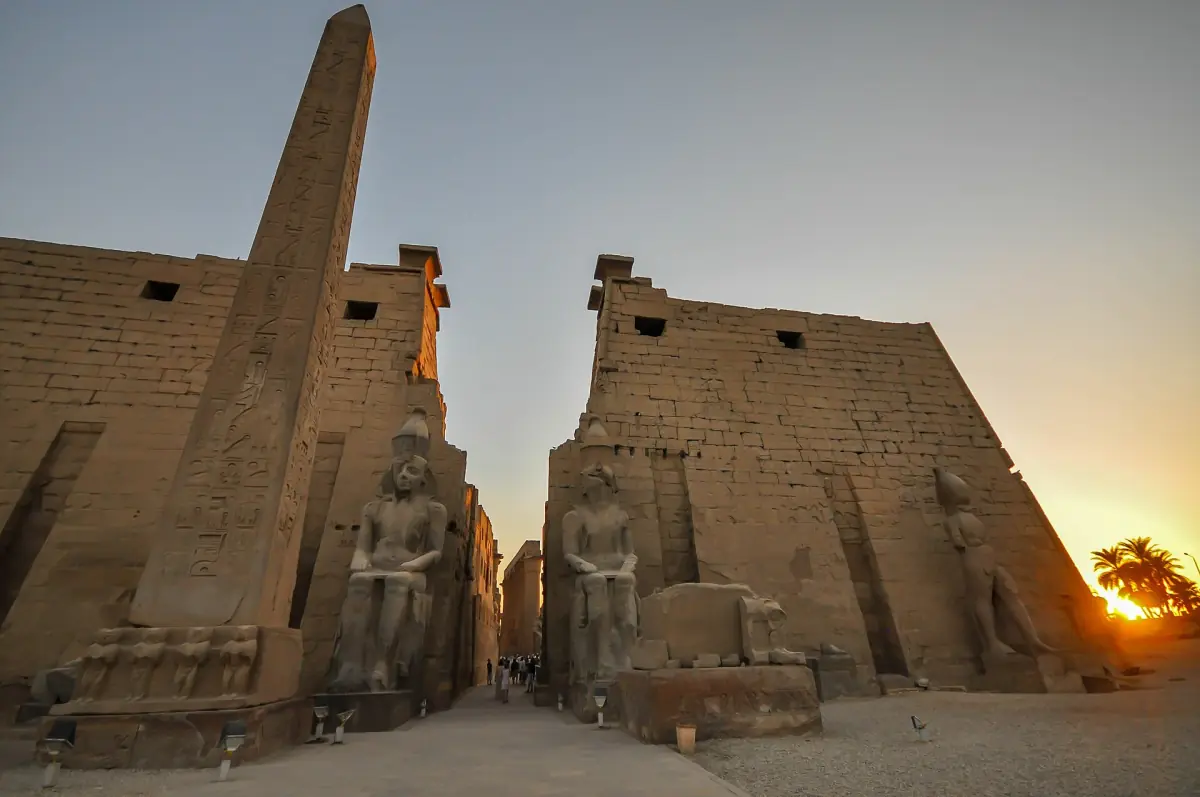
The colossal statues
Colossal figures of the king stand at the entrance. How many are visible and restored changes over time, so look rather than count.
The columned court
Behind the pylon, Ramses added a court with columns on its sides. It leads towards the older colonnade of Amenhotep III.
The obelisks
Two obelisks stood at the entrance. One remains in Luxor, the other was taken to Paris. Read the full story on the Luxor obelisk page.
The road in front of the pylon was a processional way. How it joins this temple to Karnak is covered in our Avenue of Sphinxes guide.
Our pick: sunset visit to Luxor Temple
The private sunset visit brings you a guide and entry to the temple where the Ramses II colossi stand at the pylon.
Hand-picked tours, booked through GetYourGuide. Prices are indicative starting prices in US dollars (as of October 2026). Tap a tour for live availability and the current price in your currency.
Luxor Temple tours with a guide
A guide can read the reliefs and explain which king built which part. Live prices and availability for visits that include Luxor Temple.
Who built what: Ramses II and the other kings
Luxor Temple grew over several reigns. This table shows where Ramses II fits in, so you can tell the parts apart as you walk.
| King | Parts of the temple |
|---|---|
| Amenhotep III | Core, sun court and great colonnade |
| Tutankhamun and Horemheb | Finished important decoration, including the Opet scenes |
| Ramses II | Columned court, monumental pylon, colossal statues and two obelisks |
For most visitors, the easiest route is to start at the pylon with Ramses II and work inward towards the colonnade of Amenhotep III, so you see the building in reverse order of age.
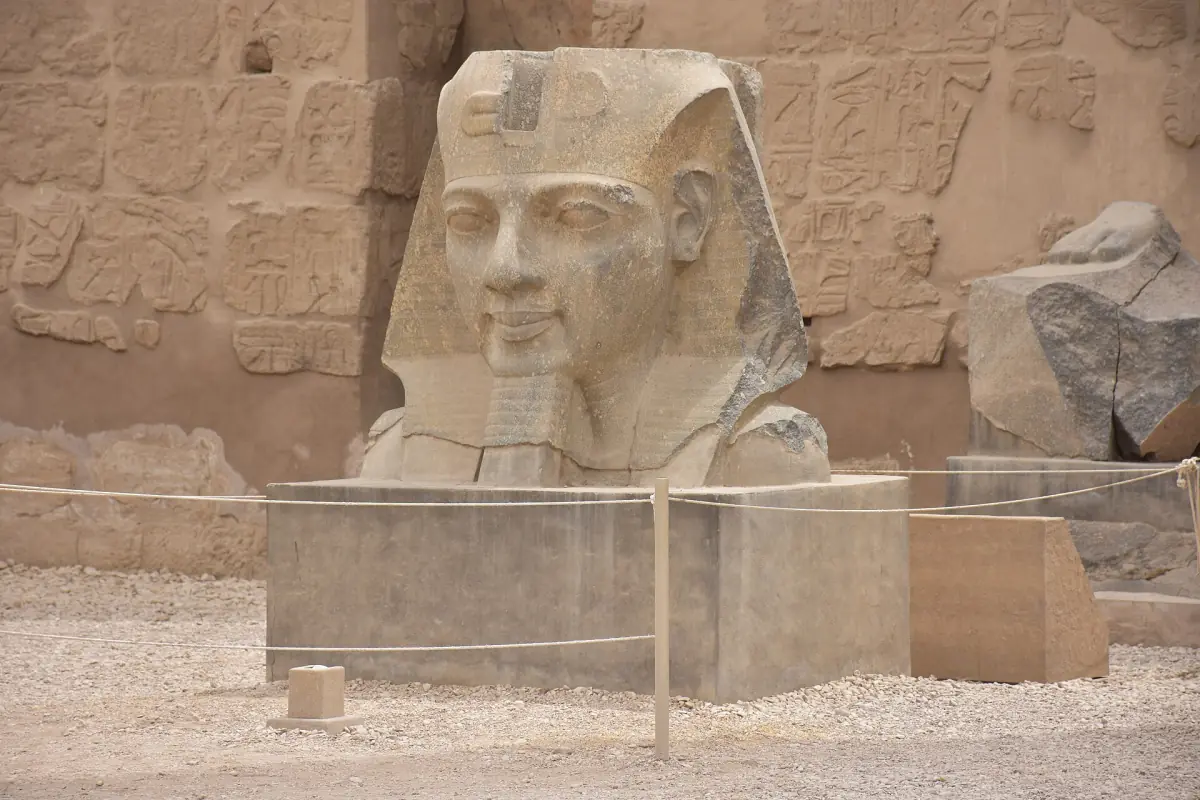
Ramses II dates and the stories on his monuments
Dates for Ramses II are usually given as the length of his reign, about 1279 to 1213 BC. That is not a birth-to-death span. His lifespan is estimated at around 1303 to 1213 BC, without an exact birth date.
Ramses had his campaigns shown in pictures and inscriptions on his monuments, above all the battle of Qadesh and the later treaty with the Hittites. When you read a royal inscription, remember that it is the king's own presentation, not a neutral report of what happened.
Do not confuse this temple with the Ramesseum, a separate temple on the West Bank that is also linked to Ramses II. For the West Bank, use our general Luxor guide. This site covers the East Bank temple only.
Seeing the statues in good light
Luxor Temple stays open until 20:00 with last entry at 19:00, so a late-afternoon or early-evening visit gives you softer light on the pylon. Columns and statues are lit at night, which changes the mood completely. Our page on Luxor Temple at night explains what to expect.
Phone photos are free. Professional equipment can need a permit, so ask before you bring a tripod. Foreign adults pay EGP 500 and foreign students EGP 250, up to age 24 with a valid student card, and children under 6 enter free.
A five-minute way to read the front of the temple
Stand back near the road first and take in the whole frontage: the pylon, the colossal statues and the obelisk that is left. Then step closer and look at the statues one by one, because their faces and crowns are worth a slow look. Find the obelisk on one side of the gateway and think of its twin in Paris. Finally go through the entrance into the court that Ramses added and continue towards the older colonnade. Doing it in this order makes the change between the two eras easy to see.
Ramses II at Luxor Temple: frequently asked questions
What did Ramses II build at Luxor Temple?
He added the columned court, the monumental pylon at the entrance and the colossal statues in front of it. Two obelisks stood before the gateway as well.
When did Ramses II live?
His reign is usually dated to about 1279 to 1213 BC, in the 19th dynasty. His lifespan is estimated at around 1303 to 1213 BC.
Is the Ramesseum part of Luxor Temple?
No. The Ramesseum is a separate temple on the West Bank. Luxor Temple stands on the East Bank, in the middle of the city.
Where is the other obelisk?
One obelisk remains at the entrance of Luxor Temple. Its twin stands on the Place de la Concorde in Paris. See the obelisk page for the details.
How much is Luxor Temple?
EGP 500 for foreign adults and EGP 250 for foreign students in 2026. It opens daily at 06:00 and closes at 20:00, with last entry at 19:00.
Which battle is shown on his monuments?
The battle of Qadesh and the later treaty with the Hittites. These scenes are the king's own presentation, not a neutral report of what happened.