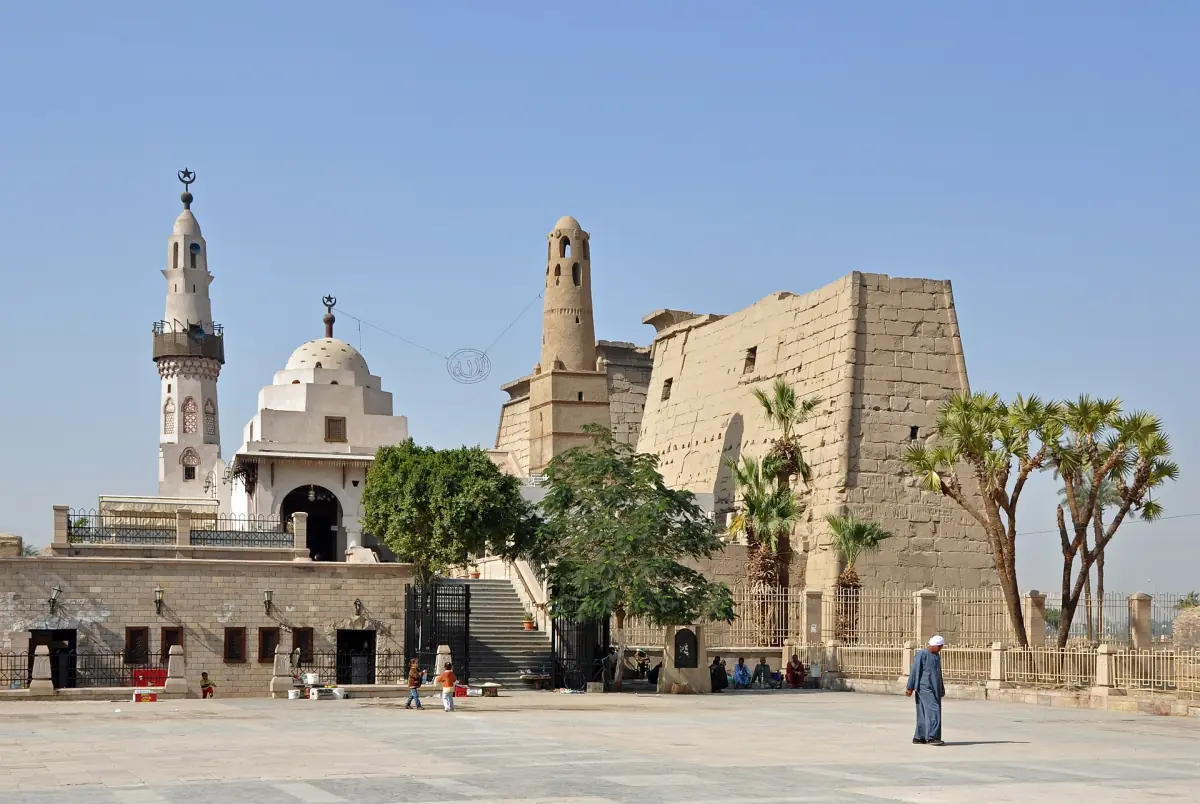
Abu Haggag Mosque at a glance
Abu Haggag Mosque stands inside the historic complex of Luxor Temple, in the first court behind the pylon. It is an active mosque, not a museum piece, and it is named after the Sufi Yusuf Abu al-Haggag. Its origins go back to the 13th century. A Roman sanctuary and a church belong to the same complex, which is why the site is often described as layers of faith on one spot.
To see the mosque from the temple court you need a temple ticket. Prices and hours are in our guide to Luxor Temple tickets. For the wider history of the site, see Luxor Temple and ancient Thebes.
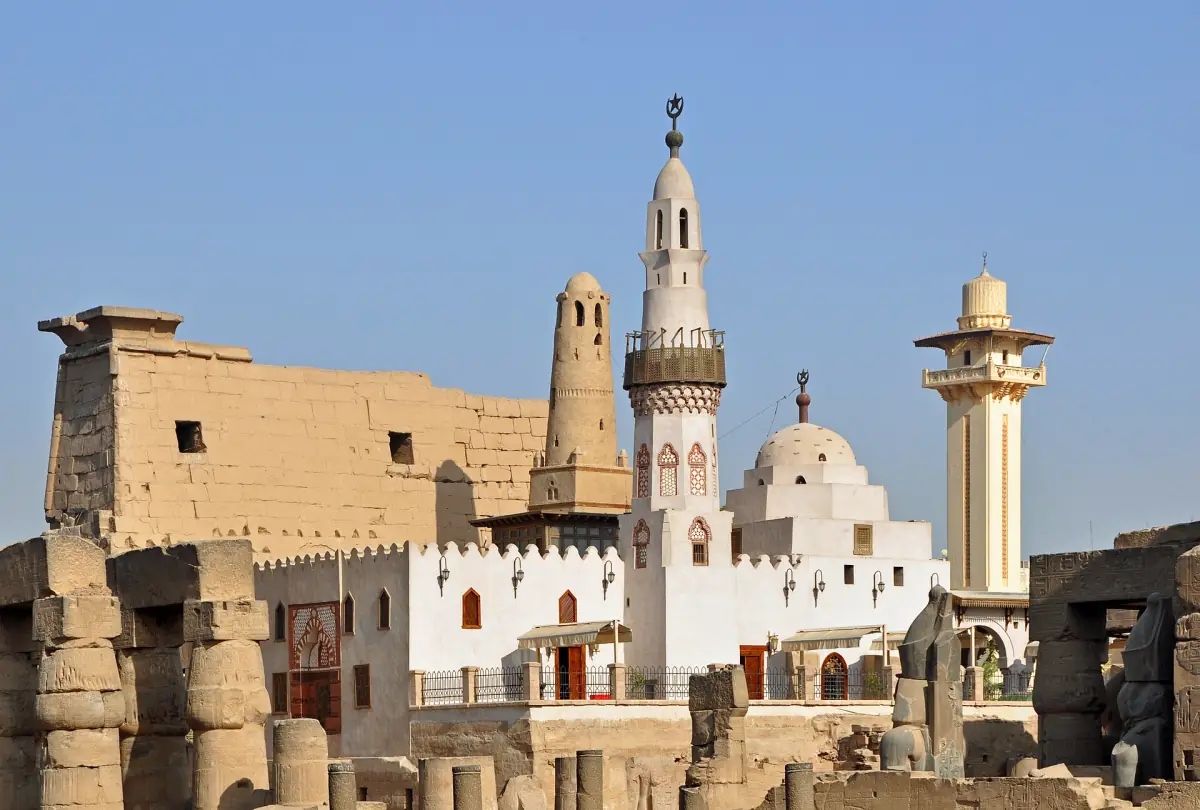
Layers of history in one court
A temple, a Roman fort, a church and a mosque.
The temple
The ancient temple, extended by several kings, is the base on which everything else stands. Read about the builders on our page on Ramses II at Luxor Temple.
The Roman fort
At the end of the 3rd century CE a fort was built around the temple. An inner room became an imperial sanctuary, and the older reliefs were plastered over and painted with Roman scenes.
The church
A church is also part of the complex. The layers sit side by side and tell several stories, not one unbroken one.
The mosque
Abu Haggag Mosque, dating back to the 13th century, is the layer still in daily use, placed on top of the older ruins.
Luxor Temple tours with a guide
A guide can show you the mosque, the Roman layers and the temple in one visit. Live prices and availability for tours that include Luxor Temple.
Visiting Abu Haggag Mosque respectfully
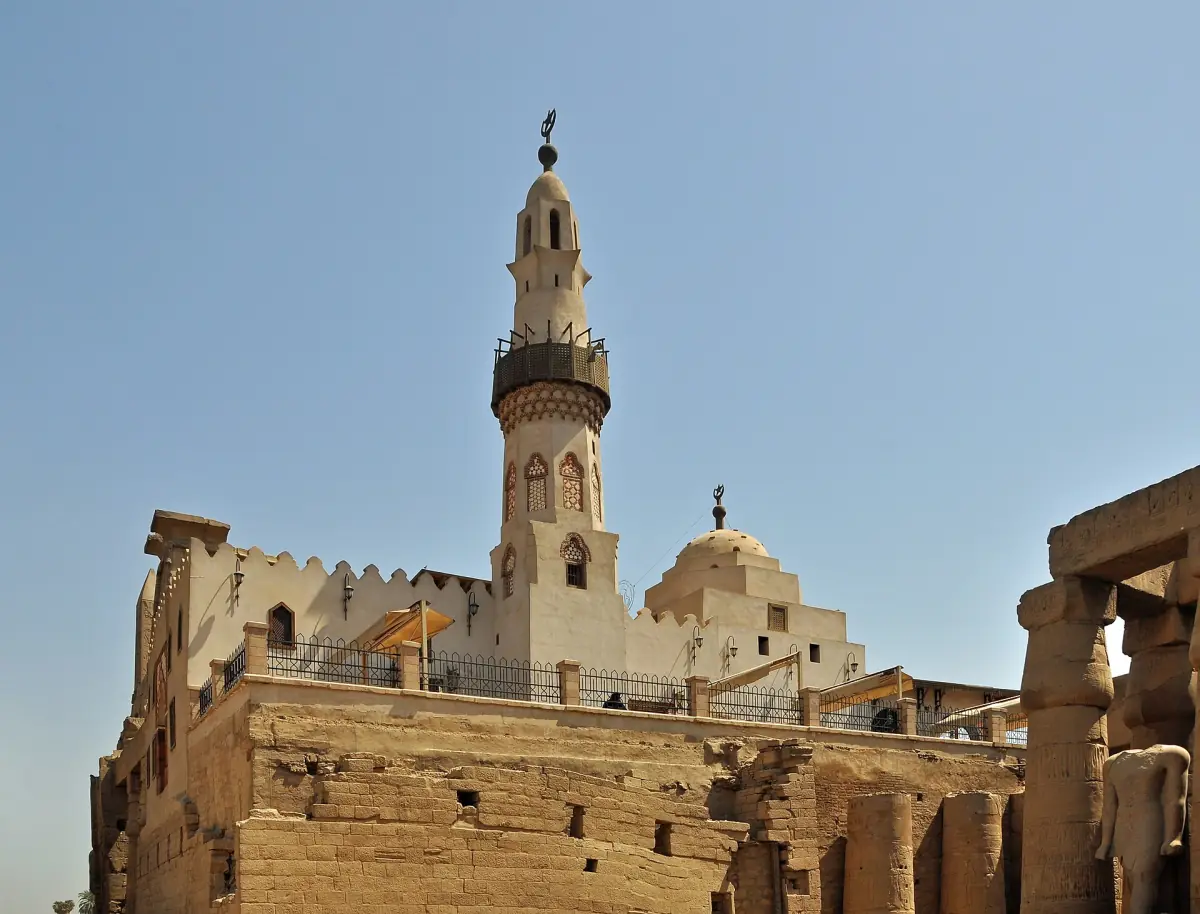
You can see the mosque, its domes and its minaret, from inside the temple. Whether you can enter the prayer room is a different question. Access to the prayer room is decided by the mosque, not by the temple ticket. Do not assume that your temple ticket includes a visit inside, and do not plan around fixed visiting times.
For places of worship in Egypt, wear clothes that cover shoulders and legs. A headscarf is recommended for women. Keep your voice low, take off your shoes if you are asked to, and be careful with photos of people who are praying.
| What | What to expect |
|---|---|
| Seeing the mosque from the court | Part of a normal visit to the temple |
| Going inside | Ask at the mosque; do not count on access |
| Clothing | Shoulders and legs covered; headscarf recommended |
| Photos | Phone photos at the temple are free; be discreet near worshippers |
For most visitors, a good approach is to enjoy the mosque as a living part of the temple from the court, and to treat a visit inside as a bonus.
The moulid of Abu Haggag
Once a year, before Ramadan, a festival is held in honour of Abu Haggag. It is a colourful event with processional carts shaped like boats, music and stick-fighting displays. The festival is a local celebration, not a show for visitors, so treat it with respect if you are lucky enough to be in Luxor then.
The dates change from year to year with the Islamic calendar. If you want to catch the moulid, ask at your hotel about the dates a few weeks ahead and stay flexible with your temple plans.
Combine it with the rest of the East Bank
The mosque sits at the heart of the temple visit, so a good plan is to see it on the way through the court, then continue to the colonnade. If you stay for the evening, columns and statues are lit at night; see Luxor Temple at night. The temple is open daily from 06:00 to 20:00, with last entry at 19:00. Foreign adults pay EGP 500 and foreign students EGP 250 in 2026.
For the surrounding streets, the souk and the Corniche, read our guide to Luxor's East Bank.
Why the mosque shapes the view of the temple
From the street, the minaret rises above the stone walls of the temple and gives Luxor Temple its unusual skyline. An ancient temple and a place of prayer still in use stand side by side. Take a moment in the first court to look at the mosque against the older stone. Luxor Temple is not only a ruin but also part of daily life in the city.
Abu Haggag Mosque: frequently asked questions
Can non-Muslims visit Abu Haggag Mosque?
You can see the mosque from the temple court. Going inside is up to the religious authority that runs it, so ask at the mosque and do not count on access every day.
Is the mosque included in the Luxor Temple ticket?
The ticket covers the temple. A visit inside the prayer room is a separate question, so do not assume it is part of the ticket.
How old is Abu Haggag Mosque?
Its origins go back to the 13th century. It is named after the Sufi Yusuf Abu al-Haggag.
What should I wear?
Clothes that cover your shoulders and legs. A headscarf is recommended for women.
When is the Abu Haggag moulid?
It is held once a year, before Ramadan, and the dates move with the Islamic calendar. Ask locally ahead of your trip.
Where is the mosque inside the temple?
In the first court of Luxor Temple, behind the pylon. A Roman sanctuary and a church belong to the same complex.