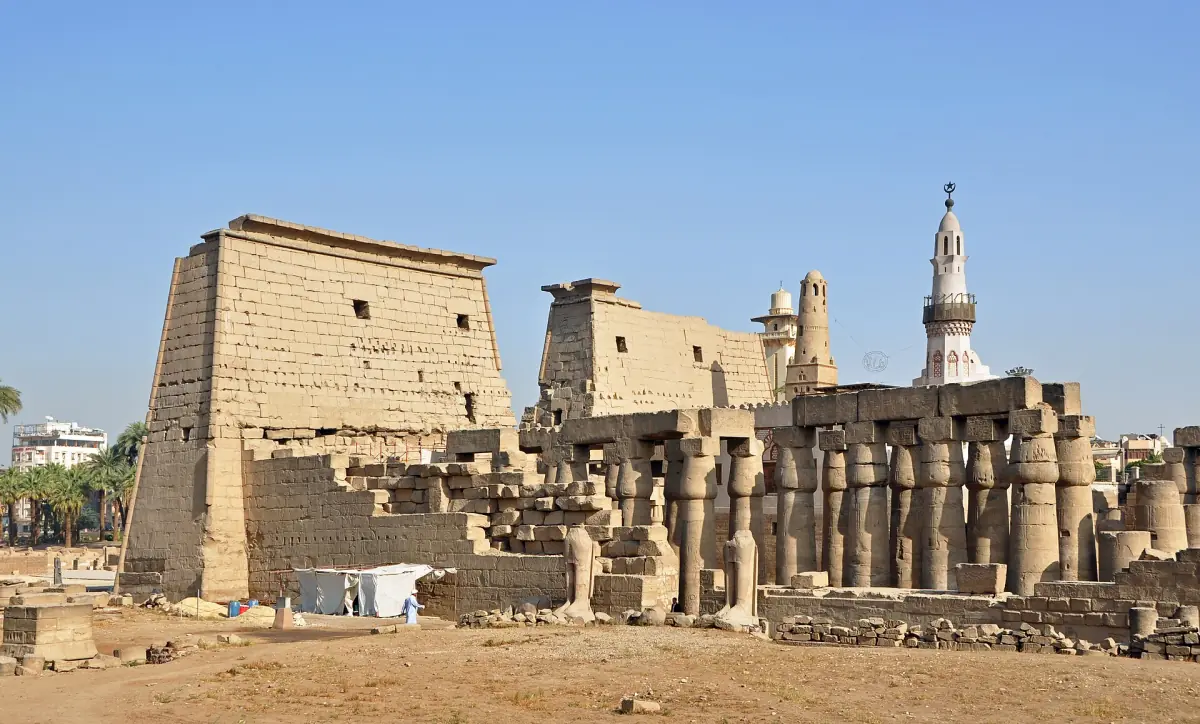
Ancient Thebes and Luxor Temple in short
Thebes is the ancient name of today's Luxor. Many of the monuments that survive there date from the New Kingdom. Luxor Temple and Karnak stand on the East Bank, and the royal tombs lie on the West Bank. Together they form the World Heritage site Ancient Thebes with its Necropolis, listed in 1979.
The temple's ancient name, Ipet-resyt, means southern sanctuary. Unlike most Egyptian temples, it is not laid out on an east to west axis. It faces Karnak instead, which lies about 3 km to the north, and a processional road joined the two. If you plan to see the temple in person, the Luxor Temple tickets page covers prices and hours.
Who built what
Several kings shaped the temple. Dates are approximate.
| Ruler | Reign | Part of the temple |
|---|---|---|
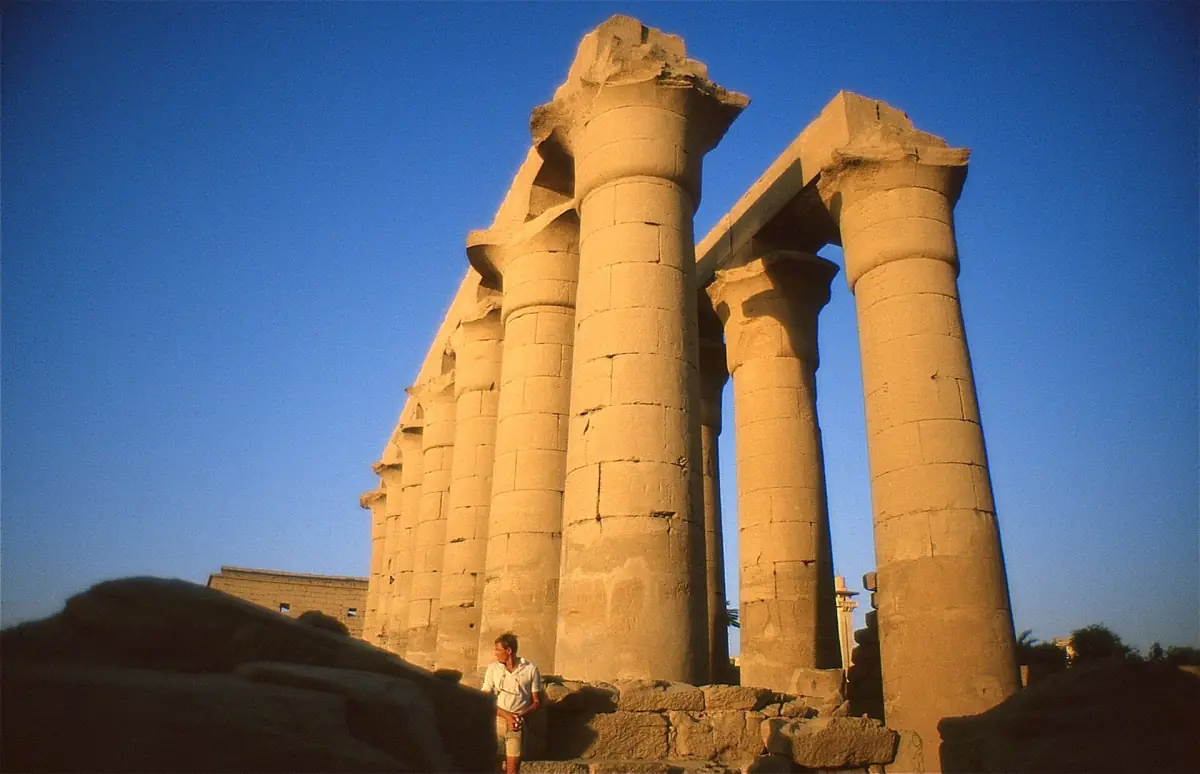
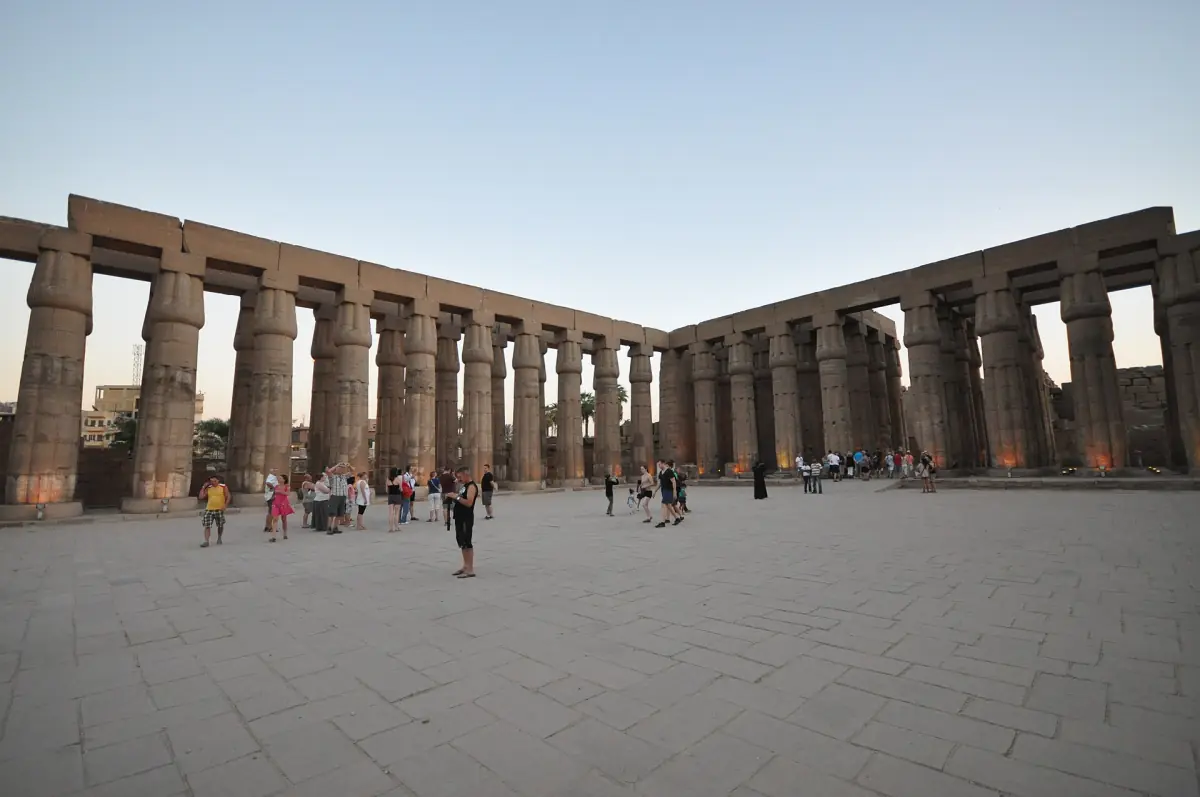
| Amenhotep III | About 1390 to 1350 BC | Core of the temple, the sun court and the great colonnade |
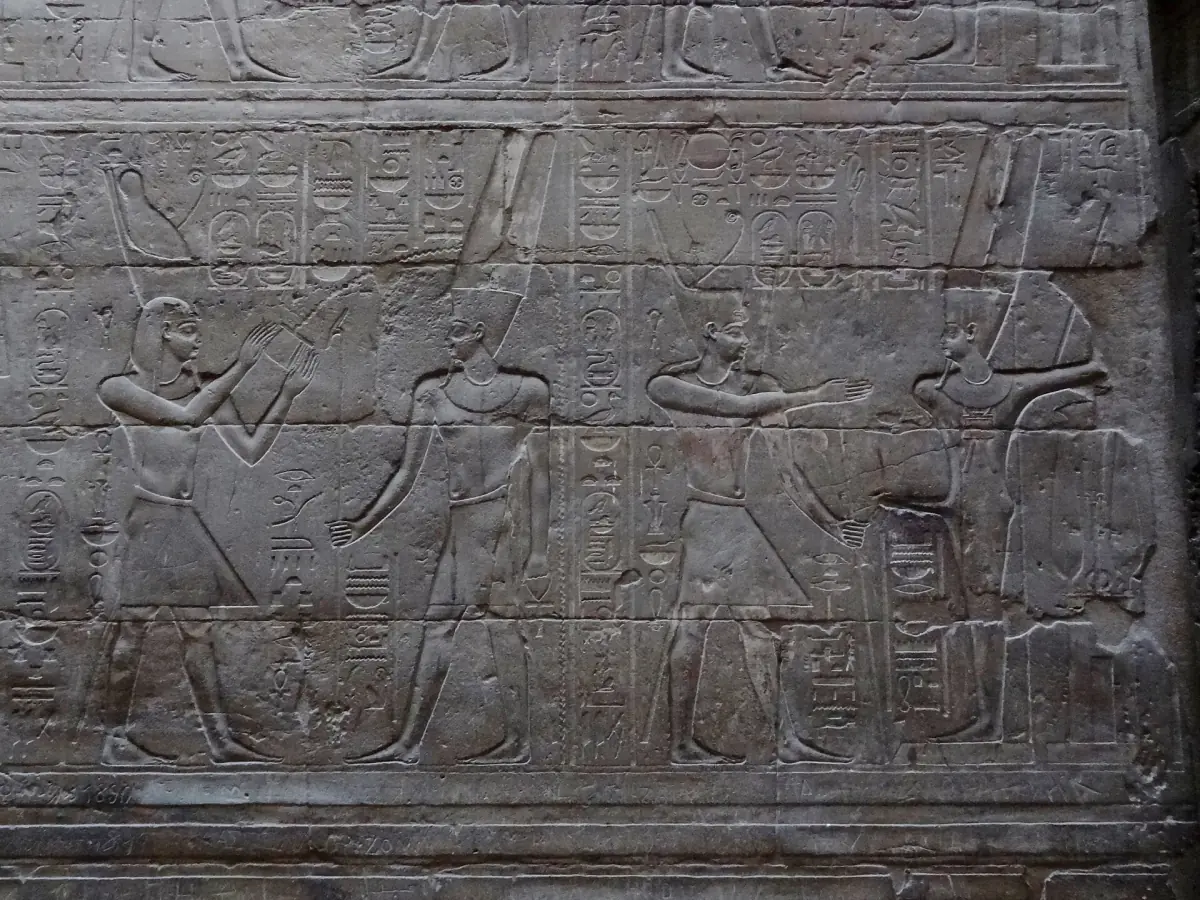
| Tutankhamun and Horemheb | After Amenhotep III | Finished much of the wall decoration, including the Opet scenes |
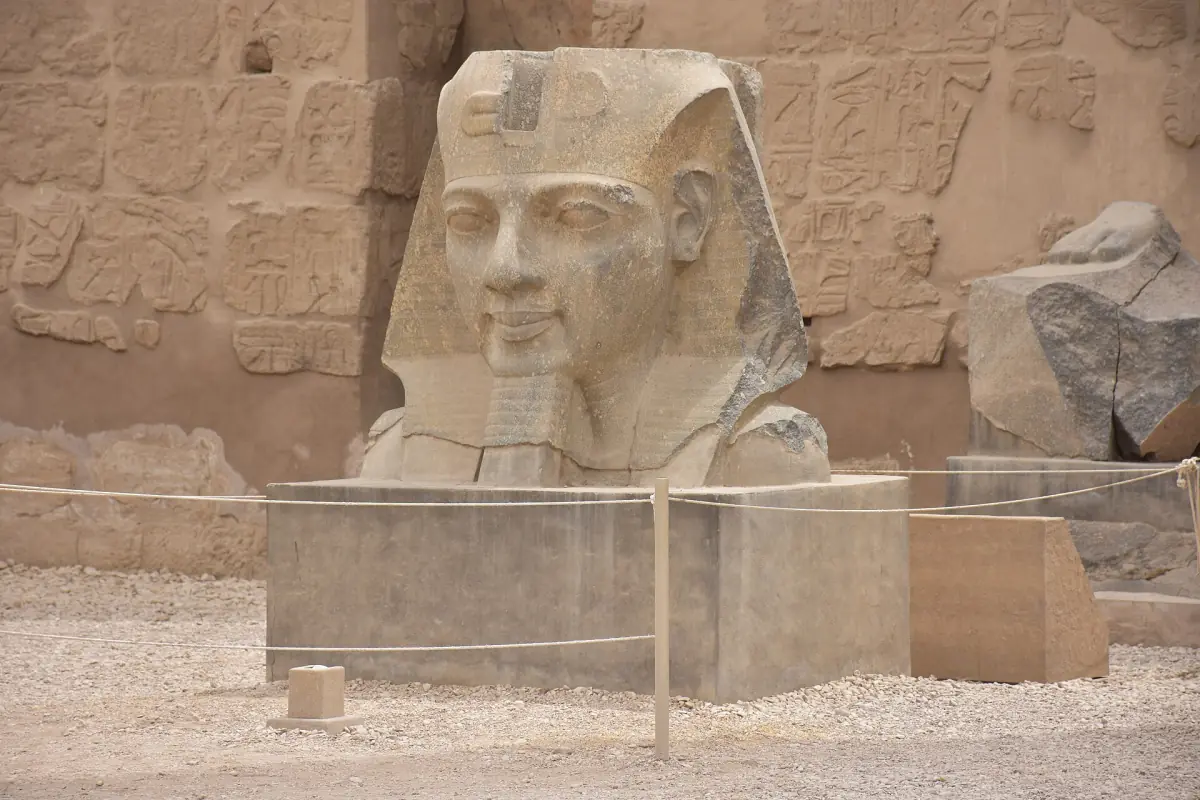
| Ramses II | About 1279 to 1213 BC | Court with columns all around, the monumental pylon, colossal statues and two obelisks |
For most visitors, this means a walk from the grand pylon of Ramses II into his court, then on to the colonnade of Amenhotep III. The colonnade has two rows of seven columns. The pages on Ramses II and Amenhotep III go into each king's work.
Our pick: private half-day with Karnak
Seeing Luxor Temple together with Karnak, with a private guide, helps you follow the procession story between the two temples.
Hand-picked tours, booked through GetYourGuide. Prices are indicative starting prices in US dollars (as of October 2026). Tap a tour for live availability and the current price in your currency.
Luxor Temple tours with a guide
East Bank tours, evening visits and day trips that bring the history to life, with live prices and availability.
The Opet Festival
The Opet Festival was a yearly procession that renewed royal power. The cult images of Amun, Mut and Khonsu came from Karnak to Luxor, and the temple was the stage for the ceremony. Scenes of the festival appear on the walls, and Tutankhamun and Horemheb finished much of that decoration.
This is a religious belief of the ancient Egyptians, not a physical fact. When you see the reliefs, you are looking at how the ancient Egyptians pictured the festival, which is not the same as a modern record of events.
Alexander and the Roman period
An inner room of the temple holds a chapel linked to Alexander the Great. The chapel does not show that he came to Luxor in person.
At the end of the 3rd century AD, a Roman fort grew up around the temple. One inner room became an imperial shrine. The original reliefs were plastered over and covered with Roman paintings. The site also holds a church and a mosque, so it carries layers of several periods and faiths. The layers sit side by side and do not tell one unbroken story.
Rediscovery and excavation
Two different finds are often mixed up.
The avenue of sphinxes
Excavations of the processional road began in 1949, and a restoration project started in 2017. The road was opened in a ceremony on 25 November 2021. Visit the Avenue of Sphinxes page for access.
The statue cache
On 22 January 1989, Mohammed al-Saghir found a hidden store of statues by chance while work was under way in the court of Amenhotep III. Most of the finds are in the Luxor Museum.
One obelisk in Paris
Two obelisks once stood in front of the entrance. One remains in Luxor and the other stands on the Place de la Concorde in Paris. Read the story on the Luxor obelisk page.
Keep exploring
More pages about the temple and its neighbours.
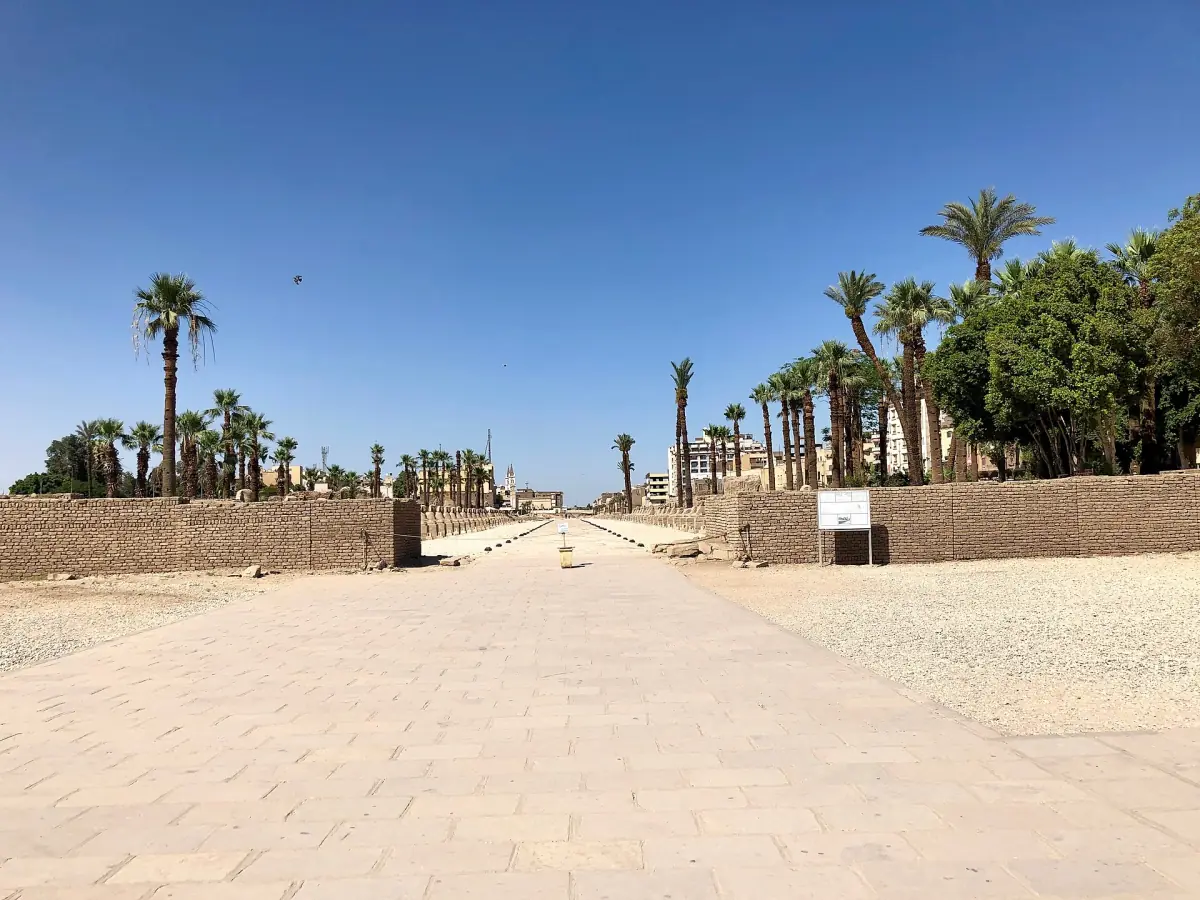
Avenue of Sphinxes
History, tickets and access.
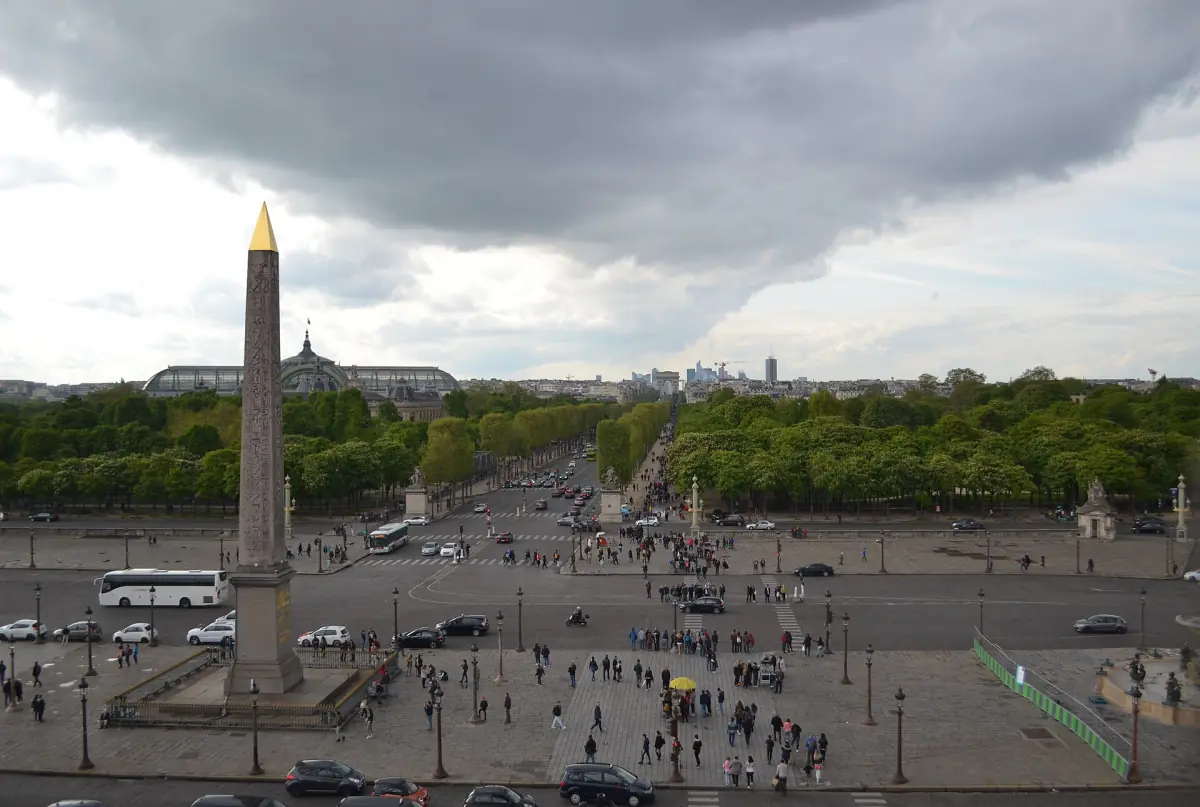
The twin in Paris
How the obelisk travelled and what it measures.
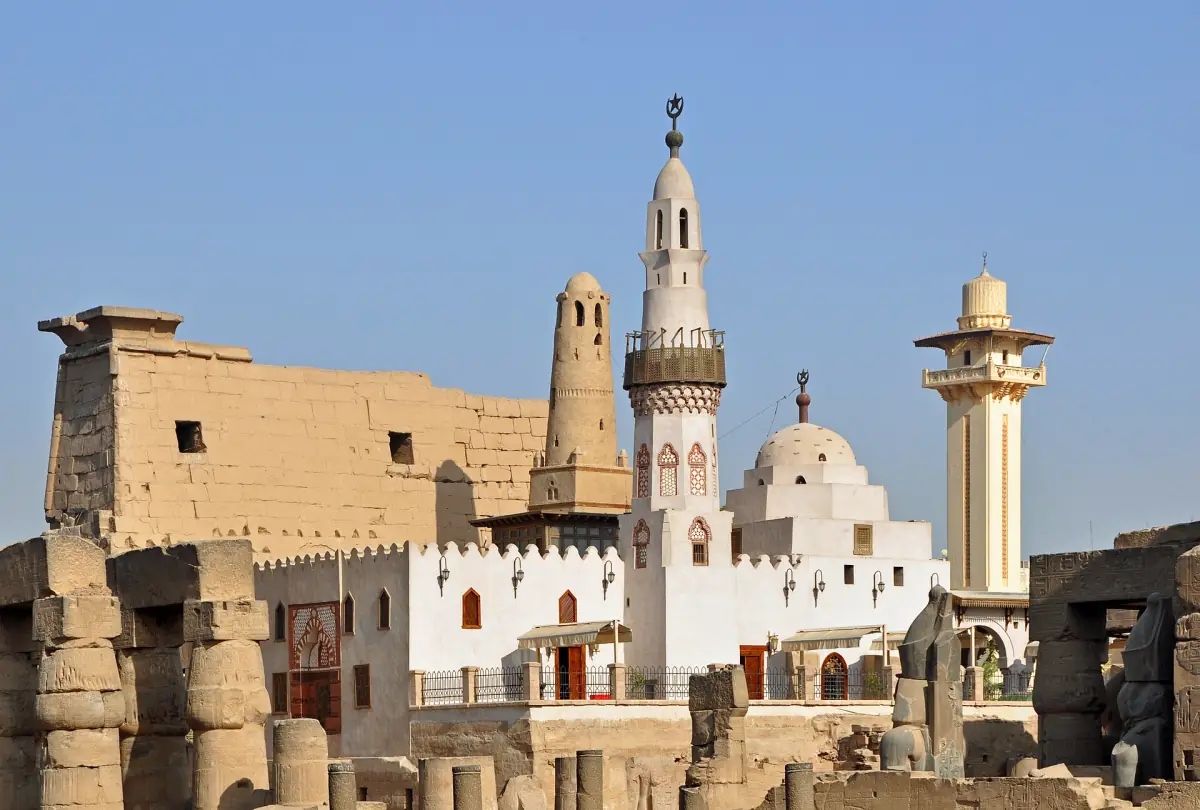
Abu Haggag Mosque
The mosque inside the temple.
Karnak, the temple that Luxor Temple faces, has its own guide in the Karnak history guide.
Luxor Temple history: frequently asked questions
Who built Luxor Temple?
Amenhotep III built the core, the court and the great colonnade. Tutankhamun and Horemheb finished much of the wall decoration, and Ramses II added a court with columns, a pylon, colossal statues and two obelisks.
What does Ipet-resyt mean?
It means southern sanctuary, and it is the ancient name of the temple.
What was the Opet Festival?
A yearly procession in which the cult images of Amun, Mut and Khonsu came to Luxor. It was meant to renew royal power. It is a religious idea, not a scientific fact.
Did Alexander the Great visit Luxor Temple?
The temple has a chapel of Alexander, but that does not show he came in person.
Why is there a mosque inside the temple?
The mosque stands in the first court, and a Roman sanctuary and a church are part of the site too. See the page on the Abu Haggag Mosque for more.
When was the statue cache found?
On 22 January 1989, during work in the court of Amenhotep III. Most of the statues are kept in the Luxor Museum.