Amenhotep III at a glance
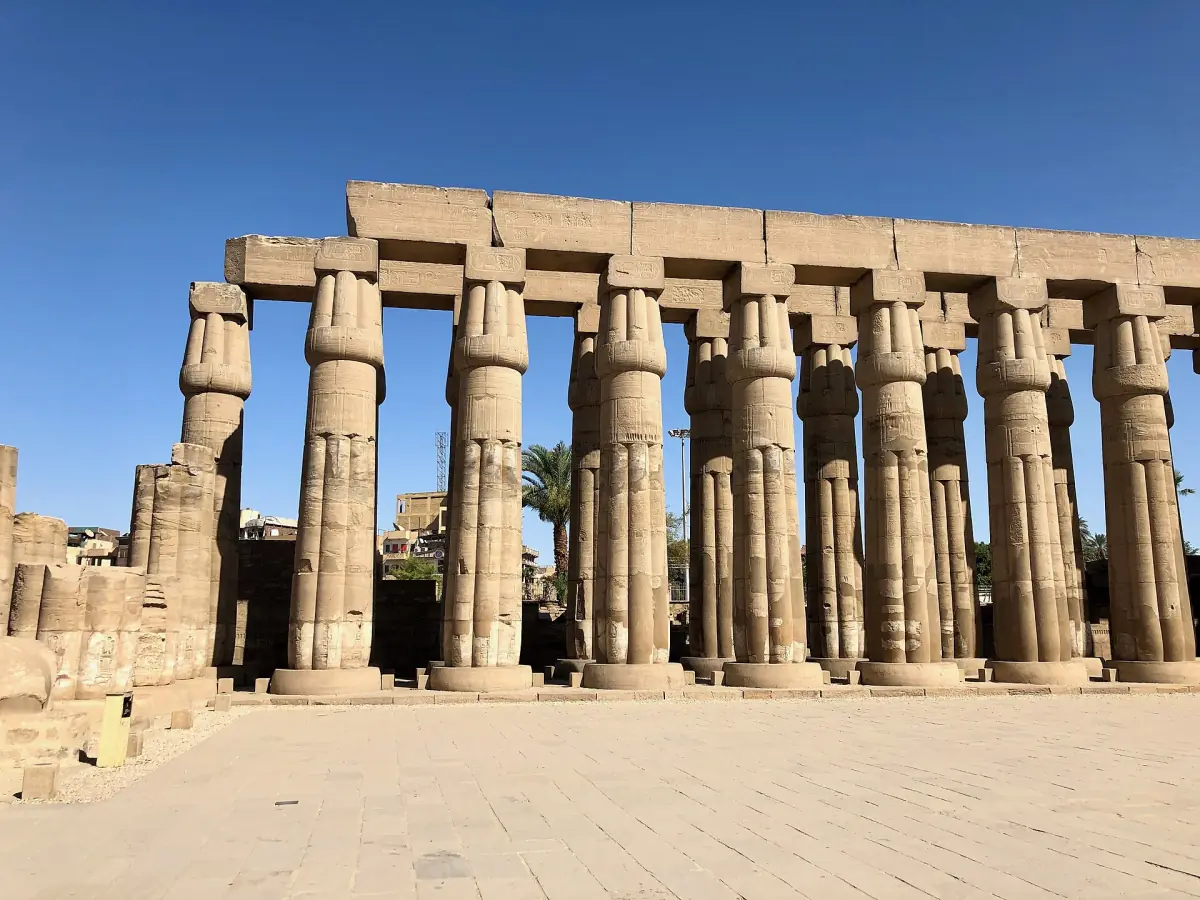
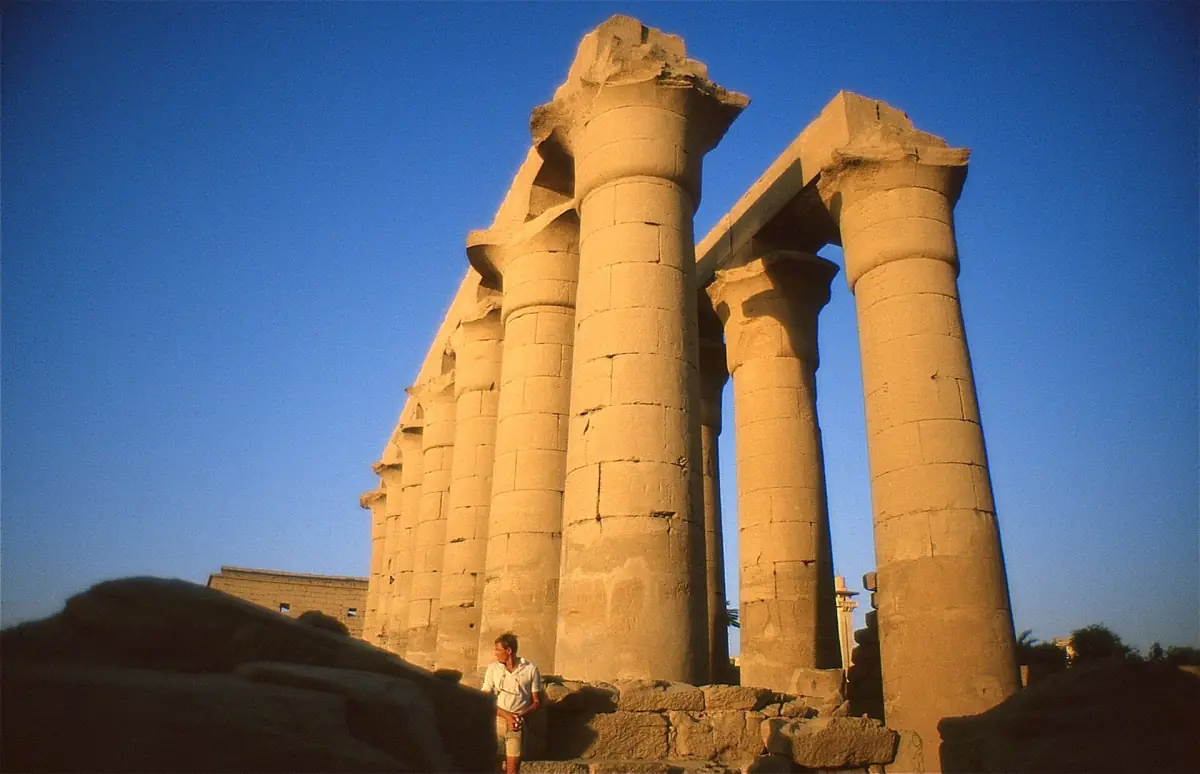
Amenhotep III is the builder of the core of Luxor Temple. The central part of the building, the sun court and the great colonnade all go back to his reign. The colonnade has two rows of seven columns and is the part of the temple most visitors remember. Later kings added to the building, which is why the temple reads as several layers on one site.
The front of the temple, with the pylon and the colossal statues, belongs to a later king. To tell the two apart, read our page on Ramses II at Luxor Temple. For prices, hours and how to buy, see Luxor Temple tickets.
What Amenhotep III built at Luxor Temple
Three parts, from the inside out.
The core
The central part of the temple is his work. This is the older heart that later kings extended and decorated. Its axis points towards Karnak instead of following the usual east-west line, and its ancient name was Ipet-resyt, the southern sanctuary.
The sun court
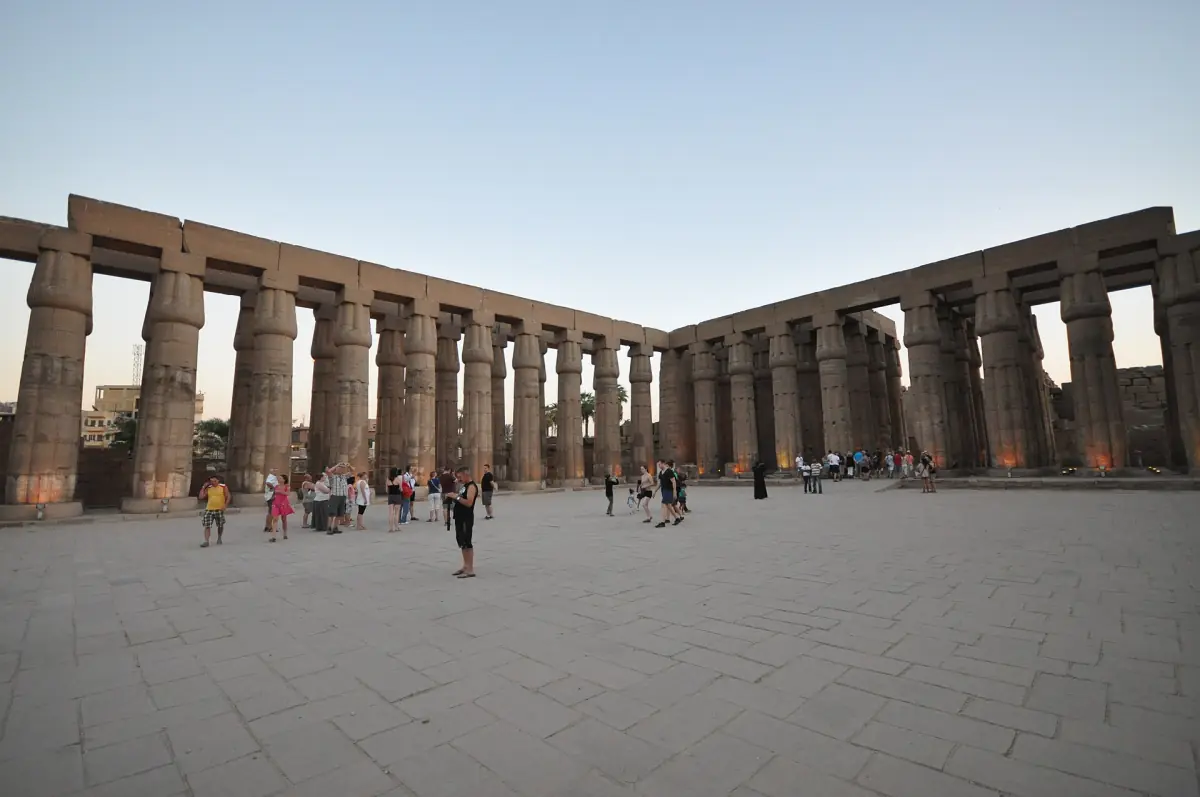
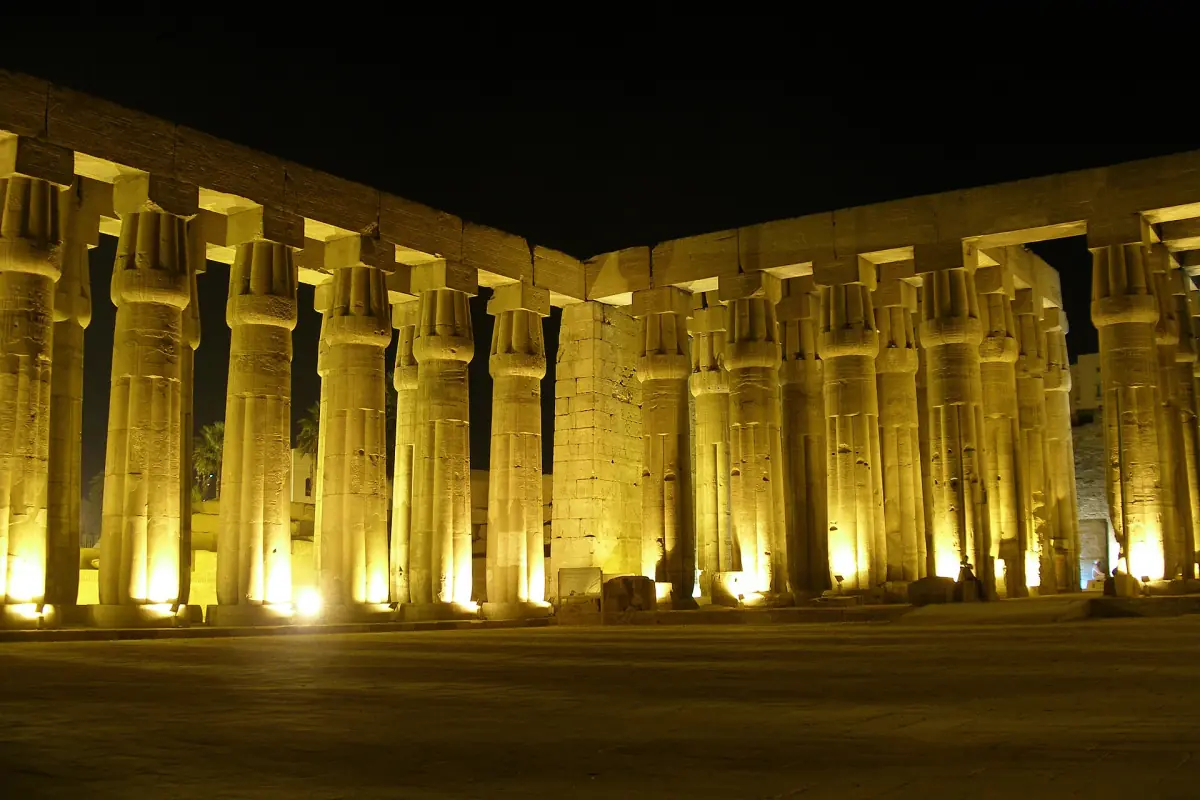
An open court with columns along the sides. Doubled rows of columns frame the space and give it its rhythm.
The great colonnade
A great hall of columns, two rows of seven. Walk it slowly and look up at the architraves.
The decoration also shows how the temple was used. It includes scenes of the Opet festival, a yearly procession that brought the cult images of Amun, Mut and Khonsu to Luxor. That story is told in our history of Luxor Temple and Thebes.
Our pick: guided visit of Luxor Temple
A guided visit with an Egyptologist helps you read the colonnade of Amenhotep III; choose the Luxor Temple option when you book.
Hand-picked tours, booked through GetYourGuide. Prices are indicative starting prices in US dollars (as of October 2026). Tap a tour for live availability and the current price in your currency.
Luxor Temple tours with a guide
A guide can lead you through the colonnade and explain who built what. Live prices and availability for visits that include Luxor Temple.
Who finished the decoration
Amenhotep III built, but he did not finish the work. Tutankhamun and Horemheb completed important parts of the decoration, including the Opet scenes. That means the colonnade you see is the work of three reigns.
| Builder | Contribution |
|---|---|
| Amenhotep III | Core, sun court and great colonnade |
| Tutankhamun and Horemheb | Finished key decoration, including the Opet scenes |
| Ramses II | Pylon, colossal statues and columned court at the front |
For most visitors, the clearest way to read the temple is to enter at the pylon, cross the later court, and then stop in the colonnade to look up at the work of Amenhotep III.
Amenhotep III dates and name
Amenhotep III ruled from about 1390 to 1350 BC. A precise birth date is not known.
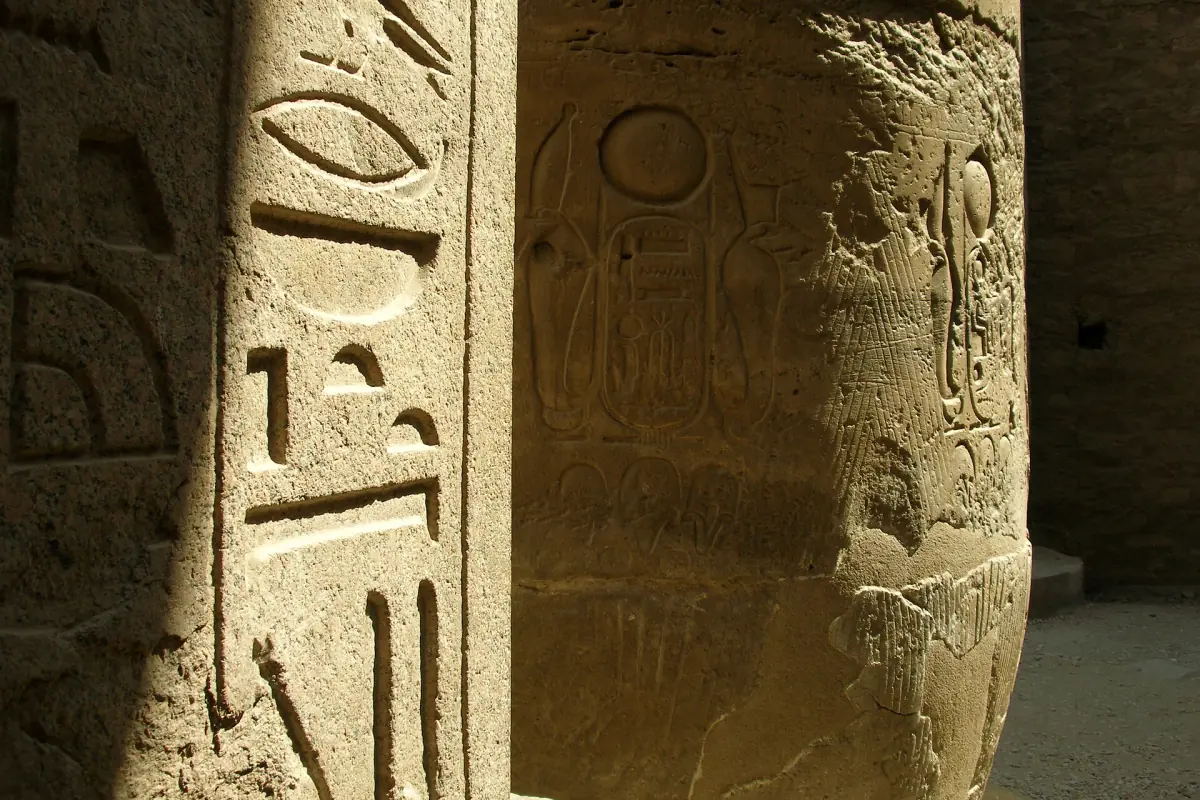
You will see his name written in two ways. Amenhotep III and Amenophis III are variants of the same royal name.
The 1989 statue find in his court
On 22 January 1989, during works in the court of Amenhotep III, Mohammed al-Saghir came across a hoard of statues by chance. The find included statues of gods and kings. Most of them are kept in the Luxor Museum. Whether a particular piece is on display can change, so check before you go. Our Luxor Museum guide lists what to look for.
The statue find and the long excavation of the processional road are two separate events. For the road, see the Avenue of Sphinxes.
Seeing the colonnade after dark
Luxor Temple is open daily until 20:00, with last entry at 19:00. Columns and statues are lit at night, and the colonnade is one of the places where this makes the biggest difference. Foreign adults pay EGP 500 and foreign students EGP 250 in 2026, up to age 24 with a valid student card. Children under 6 enter free. Read more on visiting Luxor Temple at night.
Where the temple changes character
A good place to feel the difference between the kings is the passage between the later court and the colonnade. Behind you is the work of Ramses II: the pylon, the statues and the court with columns along its sides. In front of you is the older work of Amenhotep III, with its two rows of seven columns. Stand still for a moment and look from one to the other. The change in scale and rhythm is what makes Luxor Temple a good place for first-time visitors to understand how Egyptian temples grew over time.
Amenhotep III: frequently asked questions
What did Amenhotep III build at Luxor Temple?
The core of the temple, the sun court and the great colonnade with two rows of seven columns.
When did Amenhotep III rule?
From about 1390 to 1350 BC.
Who finished the colonnade decoration?
Tutankhamun and Horemheb completed important decoration, including the Opet scenes. The temple is the work of several kings.
Is Amenhotep III the same as Amenophis III?
Yes. They are two spellings of the same royal name.
Where are the statues found in 1989?
Most of them are in the Luxor Museum. Whether a given piece is on display can change.
What is special about the great colonnade?
It is a hall of columns in two rows of seven, built by Amenhotep III. Tutankhamun and Horemheb completed important parts of its decoration, including the Opet scenes.